Waking Up with Headaches? It Might be TMJ Disorder
10 December, 2025TMJ
TMJ Headache Treatment

You wake up in the morning, and the first thing you feel is a dull, throbbing ache in your temples. Maybe your neck feels stiff, or your jaw feels "tight." You pop a painkiller, drink your coffee, and hope it goes away.

If this sounds like your daily routine, you might not just have "stress" or a "migraine." You might be suffering from a Temporomandibular Joint (TMJ) Disorder, also known as TMD.

At Deshpande Dental Care & Implant Centre, we often see patients who have visited ENTs and Neurologists for years without relief, only to realize the problem was in their mouth all along.

The Connection: Why Does My Jaw Cause Headaches?

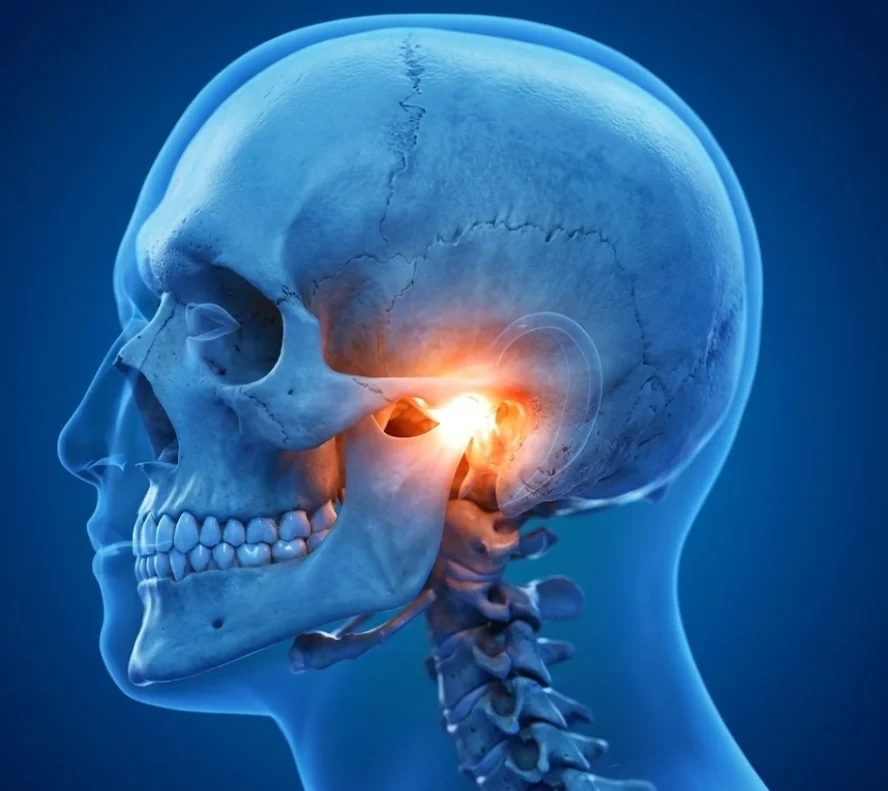
Your jaw joint (TMJ) is the most used joint in your body. It connects your lower jaw to your skull, right in front of your ears.

Surrounding this joint is a complex web of powerful muscles that control chewing and speaking. These muscles wrap around your head, temples, and neck.

Here is the chain reaction:

  1. Clenching: If you have a bad bite or stress, you unknowingly clench your teeth at night (Bruxism).
  2. Overwork: This clenching overworks the Temporalis muscle (which fans over the side of your head).
  3. Pain: An overworked muscle develops lactic acid and spasms. Since this muscle sits on your temples, the pain feels exactly like a tension headache or migraine.

5 Signs Your Headache is Dental Related

  1. Timing: The pain is worst first thing in the morning (because you were grinding all night).
  2. Tenderness: Your jaw muscles feel sore or tender to the touch.
  3. Clicking: You hear a "pop" or "click" sound when you open your mouth wide.
  4. Ear Pain: You feel a deep ache inside your ear, but the ENT doctor says your ears are clean.
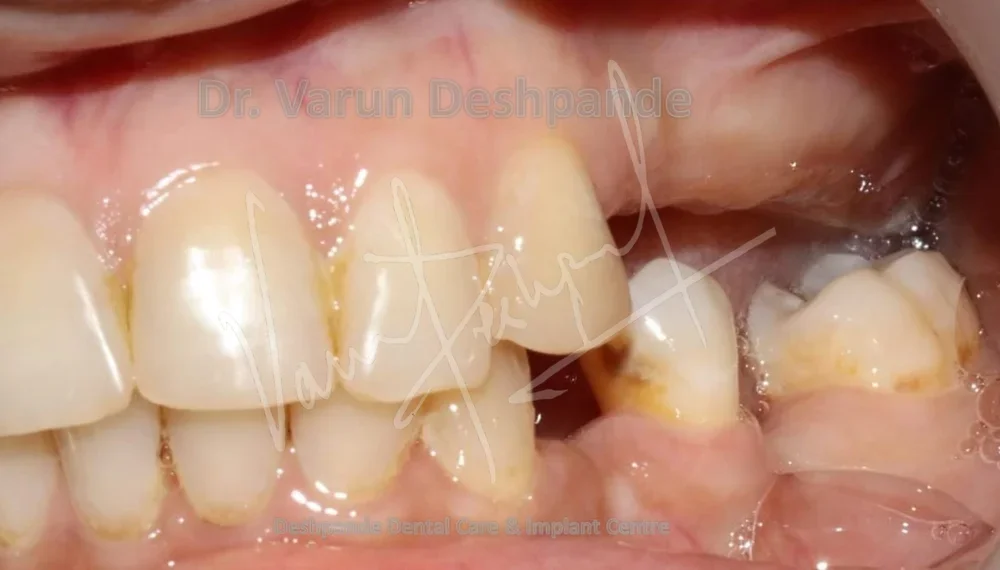
  5. Tooth Wear: Your teeth look flat, short, or have small cracks.

Meet the Expert: Dr. Varun Deshpande

Treating TMJ is not something every dentist does. It requires a Prosthodontist—a specialist in occlusion (the bite) and joint function.

Dr. Varun Deshpande (MDS Prosthodontist) explains:

"Painkillers only mask the symptom. To cure the headache, we have to stop the muscle spasm. We do this by correcting the bite so the muscles can finally relax."

The Solution: Non-Surgical Therapy

The good news is that 90% of TMJ cases do not need surgery. We use conservative, reversible treatments.

1. The Occlusal Splint (Night Guard)

This is the most effective treatment. It is a custom-made, hard acrylic device that fits over your teeth while you sleep.

  • De-programming: It prevents your back teeth from touching, which signals your brain to relax the jaw muscles.
  • Protection: It stops you from grinding your enamel away.
  • Joint Relief: It slightly separates the jaws to take pressure off the compressed joint disc.

  1. Bite Correction (Equilibration)

Sometimes, a single tooth sticking up too high can throw off your entire jaw balance. Dr. Varun uses digital analysis to find these interference points and gently smooths them down.

  1. Physiotherapy

We teach you specific jaw exercises to stretch and strengthen the muscles, breaking the cycle of pain.

Conclusion

You don't have to live on painkillers. If your headaches come with jaw stiffness or clicking sounds, the solution might be simpler than you think.

Stop the morning pain. Schedule a TMJ consultation with Dr. Varun Deshpande at our Civil Chowk or Jule Solapur clinic. Let's get to the root of your headache.
Frequently Asked Questions


Morning headaches are often caused by clenching or grinding your teeth (Bruxism) during sleep. This overworks the temporalis muscle on the side of your head, leading to tension headaches.

TMJ Disorder (TMD) affects the jaw joint and surrounding muscles. It can be caused by a bad bite, stress, or teeth grinding, leading to pain, clicking sounds, and limited mouth opening.

Since the headaches are caused by jaw muscle spasms, correcting the bite or using a night guard (splint) allows the muscles to relax. This treats the root cause rather than just masking the pain with pills.

An occlusal splint is a custom-made hard acrylic device worn over your teeth at night. It prevents grinding and 'deprograms' the jaw muscles, allowing them to rest and relieving pressure on the joint.

A clicking or popping sound usually indicates that the small disc inside your jaw joint is slipping out of place. While not always painful, it is a sign of TMJ dysfunction that should be evaluated.

Yes. The jaw joint is located right next to the ear canal. Inflammation in the TMJ often radiates pain into the ear, leading many patients to think they have an ear infection when it is actually a dental issue.

Rarely. 90% of TMJ cases at Deshpande Dental Care are treated with non-surgical methods like splint therapy, bite correction, and physiotherapy.

Untreated TMJ issues can lead to chronic migraines, permanent damage to the jaw joint, severe tooth wear, and even cracked teeth from the force of grinding.

Still have questions?

Can't find the answer you're looking for? Please chat with our friendly team.

Contact Us Today

More Blogs

Diagram comparing bone loss under a dental bridge versus bone preservation with a dental implant
10 December, 2025

Dental Implants vs. Bridges: What's the Best Choice for Missing Teeth?

Choosing between a Bridge and an Implant? We dive deep into the differences regarding bone preservation, cost-effectiveness, and longevity to help you make the right choice in Solapur

Read Blog
Clinical comparison of a patient with severe tooth wear before and after Full Mouth Rehabilitation.
10 December, 2025

Do I Need Full Mouth Rehabilitation? 5 Signs Your Bite is Collapsing

Are your teeth looking short or worn down? You might be suffering from 'Bite Collapse.' Learn the 5 warning signs and how Full Mouth Rehabilitation by Dr. Varun Deshpande can restore your face and function

Read Blog
porcelain veneers on front teeth
10 December, 2025

Porcelain vs. Composite Veneers: Which Smile Makeover Fits Your Budget?

Dreaming of a perfect smile but unsure about the cost? We compare the price, durability, and aesthetics of Porcelain vs. Composite Veneers to help you choose the right option in Solapur

Read Blog
Diagram showing inflamed dental pulp causing pain versus a clean, sealed root canal
10 December, 2025

Is Root Canal Treatment Painful? Myths vs. Modern Reality

Dreading a root canal? Discover why the "pain" is a myth. Learn how modern anesthesia and rotary technology make RCTs at Deshpande Dental Care painless and fast

Read Blog
Step-by-step diagram of dental composite layering technique on a fractured incisor
10 December, 2025

What Happens During an Aesthetic Restoration? A Step-by-Step Guide

Curious how we fix chipped teeth or close gaps in just one hour? Dr. Rucha Deshpande walks you through the 5 steps of Aesthetic Composite Restoration

Read Blog
Side-by-side comparison of a metal-ceramic crown showing a dark line versus a translucent zirconia crown
10 December, 2025

Zirconia vs. Metal Crowns: Why Metal-Free Caps Last Longer

Choosing a dental cap? We compare old-school Metal (PFM) crowns with modern Zirconia. Discover why Zirconia is stronger, safer, and looks 100% natural

Read Blog
Teeth Whitening
10 December, 2025

Professional Whitening vs. Home Kits: Which is Safer for Your Enamel?

Thinking of buying charcoal powder or a whitening toothpaste? Read why professional whitening at the dentist is safer, faster, and more effective for your enamel

Read Blog
Complete and Partial Dentures
10 December, 2025

Tired of Loose Teeth? How Complete and Partial Dentures Restore Chewing and Confidence

Struggling with loose dentures or missing teeth? Discover how modern BPS Complete Dentures and Cast Partials offer superior suction, comfort, and chewing ability

Read Blog
Root Canal vs Filling
10 December, 2025

Deep Cavity Treatment: When Do You Need a Root Canal vs. a Filling?

Is it just a cavity or something worse? We explain the difference between reversible sensitivity and nerve infection, and how Dr. Rucha Deshpande saves teeth from Root Canals

Read Blog